
Predecessor Builds Guide: Items for Every Playstyle
Use the Predecessor builds guide to match items to your hero, counter tanks and healing, and plan smarter purchase orders for carries, mages, and supports.
Jump to

How to Choose Items for Your Hero
Your next purchase should solve the problem keeping you from winning fights. This Predecessor builds guide explains how to match items to your hero’s damage, handle enemy defenses, and spend gold with a purpose. Start with your hero’s strengths, then adjust your purchases around the opponents you actually have to beat.
Before choosing an item, answer these questions:
- Where does your damage come from? Separate basic attacks, ability damage, and effects triggered by attacks.
- What keeps your hero effective? Consider mana, cooldowns, durability, healing, or uninterrupted access to an ultimate.
- What is stopping you? Identify armor, a large health pool, healing, burst damage, or crowd control.
- When do you need the purchase to pay off? Weigh immediate fighting strength against scaling that takes longer to deliver.
Physical or magical damage alone does not determine a build. Two heroes dealing physical damage can need different items if one relies on repeated basic attacks and the other commits everything to a short ability combo.
Official page: Predecessor (predecessorgame.com)
Mage Builds: Balance Damage, Mana, and Survival
For a mage, connect each purchase to the spells you need to land. Raw magical power supports burst damage, while mana and ability haste help sustain repeated casting. Enemy durability and your ability to survive a fight should influence the order.
 Image: Steam / Omeda Studios
| Item | Build function |
|---|---|
| Orb of Enlightenment | Scaling toward later stages of the match |
| Oblivion Crown | Magical power scaling and late-game burst |
| Golem's gift | Magical power with protection against physical burst |
Choose your early purchases around your immediate workload. If farming gives you steady income, consider whether you can complete an expensive damage item before the next important fight. If an assassin keeps forcing you out of lane, prioritize protection that lets you continue farming and casting.
Keep a separate answer for enemy healing. Move an anti-healing purchase earlier when recovery is deciding fights, rather than buying another damage item automatically.
Crowd control deserves its own check. For heroes such as Gideon or Narbash, whose ultimates can be disrupted, evaluate protection that helps the ultimate continue. More damage contributes little when an interruption cuts off the ability carrying your fight.
Carry Builds: Separate Tank Damage From Burst
Basic-attack carries need a coherent damage plan. Attack speed, critical strikes, and on-hit effects serve different combinations of hero abilities and item passives. Build around the attacks your hero can repeatedly deliver.
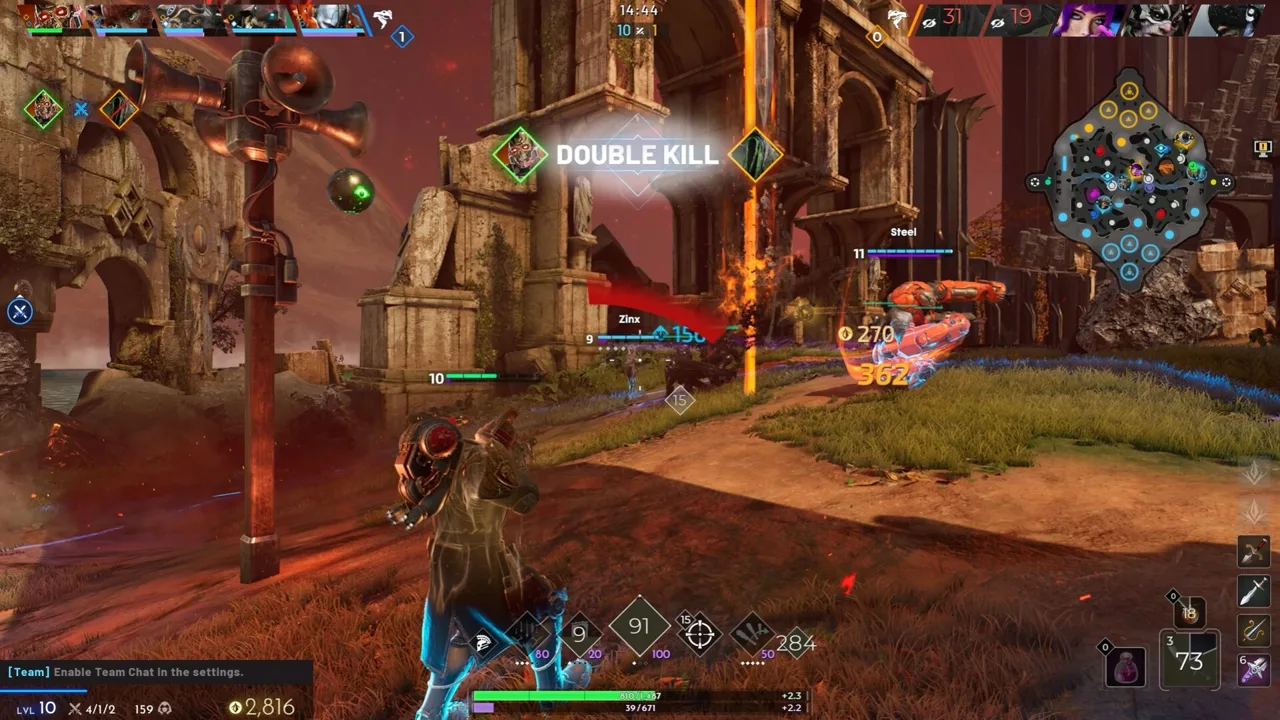 Image: Steam / Omeda Studios
| Item | Build function |
|---|---|
| Stormbreaker | An on-hit option that also supports wave clear |
| Demolisher | Damage against enemies investing in armor and health |
| Perforator | Penetration oriented toward bursting less durable targets |
Distinguish enemy health from enemy armor. A large health pool and heavy armor are separate problems; inspect both before deciding which damage purchase comes next.
Against a durable frontline, prioritize the tools that let you keep damaging the targets within reach. Against vulnerable damage dealers, consider whether burst-oriented penetration fits your hero’s attack pattern.
Do not copy a burst build onto a hero simply because both heroes occupy the carry role. Ask whether your abilities support short damage windows or whether your value comes from sustained attacks.
If physical assassins repeatedly reach you, consider a defensive adjustment. Stonewall provides an armor-focused option against physical burst. Compare that protection with the damage you delay, and make the purchase around the threat deciding your fights.
Bruiser Builds: Connect Abilities and Basic Attacks
Bruisers need enough durability to remain in combat while delivering damage. Items combining power, health, and empowered basic attacks support that pattern.
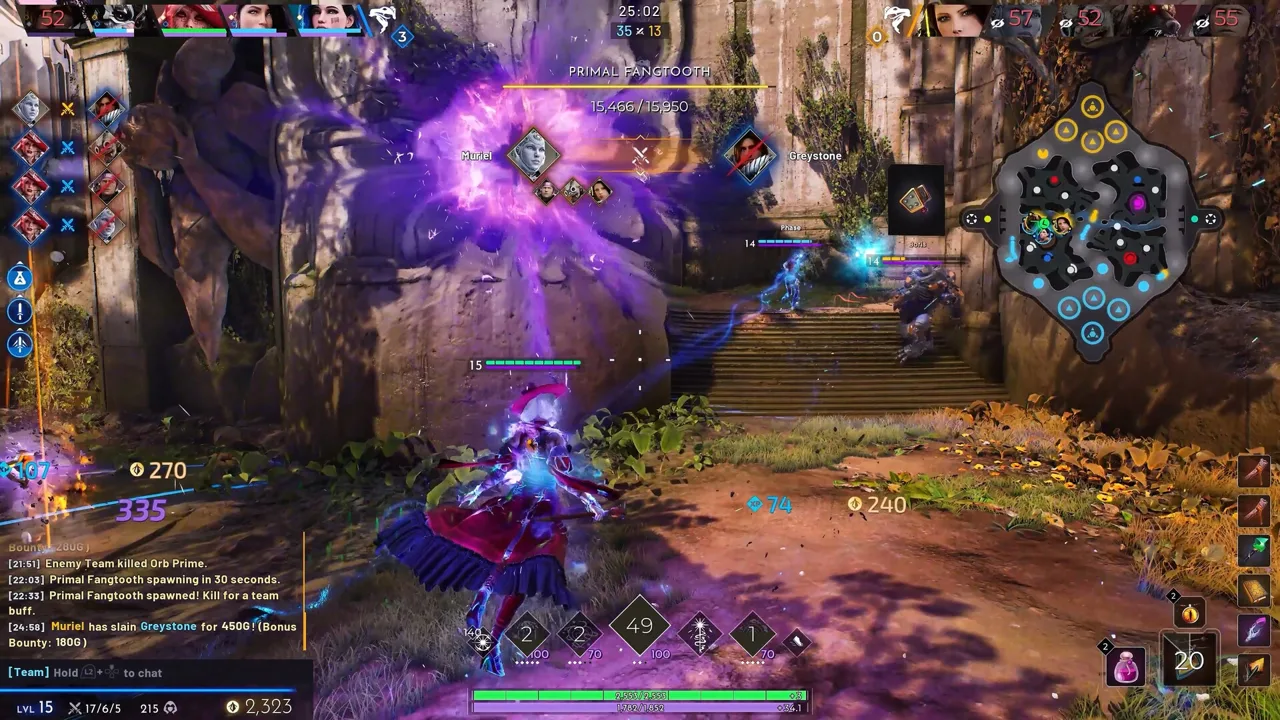 Image: Steam / Omeda Studios
For an ability-and-attack hero such as crunch, look for item effects that reward the sequence you already use. Check what activates an empowered attack before buying around it. Then practice placing the attack into your combo instead of leaving the item’s effect unused.
Armor reduction adds another consideration. basilisk supplies physical armor shred, making it relevant when your team needs help damaging armored opponents. Coordinate that purchase with teammates rather than treating it as an isolated personal damage choice.
Movement effects also deserve attention. A bruiser must stay close enough to keep attacking, so weigh a useful speed boost or slow alongside the item’s power and health.
For a split-pushing plan, check whether your empowered attacks affect structures. Match the purchase to the job you intend to perform on the map.
Tank Builds: Buy Wave Clear and Relevant Defenses
A tank still needs to clear waves and earn gold. Fire Blossom supplies passive damage that supports wave clear, giving tank builds a way to handle minions without relying entirely on offensive purchases.
After addressing clear speed, build defenses against the damage reaching you:
- Physical burst: Consider armor-focused protection such as Stonewall.
- Healing opponents: Look for an anti-healing effect your hero can apply reliably.
- Mixed incoming damage: Balance physical and magical defenses around the enemies threatening you.
- Enemies buying anti-tank items: Reevaluate further health purchases alongside additional resistances.
Avoid judging a defensive item only by its health total. Enemy purchases such as Demolisher specifically address durable targets, so inspect their builds before committing more gold to the same defensive stat.
Choose durability for your role in the fight. Initiating into the enemy team and protecting a teammate can expose you to different attackers.
Support Builds: Strengthen the Utility You Deliver
Healer supports can invest in items that reinforce their healing and utility. Wellspring and Crystal tier are examples of that direction.
Build around the part of your kit your team needs most. If healing is your contribution, evaluate purchases that strengthen it. If you need to absorb attacks while protecting a teammate, consider the durability required to stay in position.
Account for income before copying an expensive build. Compare the components you can afford now with the completed item you are working toward. A purchase order built around steady minion farming deserves reconsideration when your role generates gold differently.
Also check how reliably you can apply a counter effect. Coordinate anti-healing and other utility purchases with teammates whose attacks or abilities can reach the relevant enemy.
Plan Purchase Order Around the Next Fight
Plan the route to your completed build with the same care as its final items.
Use this purchase sequence:
- Establish your hero’s main function. Address damage, wave clear, or utility that helps you perform your role.
- Identify the active obstacle. Look for healing, armor, burst damage, or interrupted abilities.
- Adjust the next purchase. Bring the relevant counter forward when that obstacle is already deciding fights.
- Reassess after enemy purchases. Change your remaining order when opponents invest in new defenses.
When comparing build statistics, examine match count alongside win rate. An unusually high win rate across very few games gives you less information than a frequently purchased item with a substantial match history.
Look at individual item positions, too. A popular opening purchase can serve a different purpose from a late damage multiplier. Before copying either, identify what it accomplishes at that stage and whether your match presents the same need.
Continue with
 Predecessor Valmont Build: Skills, Mana, and AugmentsShape your Predecessor Valmont build around magical power, Lilith, and smart mana use. Learn ability priorities, augment tradeoffs, and teamfight tactics.
Continue exploring

Join the community
Official channels for news, updates and player help: